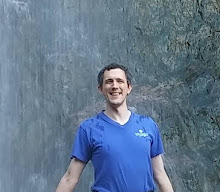
This past June 11th through 16th, I took a vacation down to my mission stomping grounds to be with a very special family during their
temple sealing. I am always telling people how friendly Mexicans are as a people, and I certainly witnessed this on my trip there. I was treated like a king everywhere I went. For example, I was only in Hermosillo 3 months of my mission, but I was practically best friends with the people in the ward during my brief visit.
I touched down in Hermosillo after an uneventful flight around 3 pm, and was pleasantly surprised to find a vigorous cool wind offsetting the mild heat of the Sonoran summer. This nice weather lasted through most of my stay. The pleasant surprises continued as I found Hermano Vega and a co-worker from the Ford Motor Plant inside the airport, waiting to drive me home.
A little about "Las Vegas": the husband and wife are very witty and love to go back and forth. Hno. Vega was involved with some comedy sketches work I understand as well, involving a certain Chik-fil-a style sombrero:

Despite Sister Vega's claims to the contrary, they had lots of friends and visitors (besides me :). Back when Hno. Vega was the mission leader, they were also very socially connected, which helped the missionaries out a lot, I can tell you. As long as we're on culture, I'll throw out a fun fact. The Sonoran visit, as a rule, must last 20 minutes or longer. An hour or two is more likely. I like the high value that Sonorans put on spending time together; it really is a cultural value. In our case, we were visiting pretty much all day, but hey, there was a lot to catch up on.
Next morning, I got up around bright and early to prepare for the hour-long bus drive to the temple. Hermana Vega fixed us some quesadillas (cheese melted on flour tortillas), showered, and changed into a skirt and blouse to take me there. The Vega family has struggled a bit to stay active in the Church recently, but Hna. Vega assured me they were going to return to full activity soon. She remarked it had been a while since seeing the temple.
At the temple around 8 am, I had a very joyful reunion with the Moreno family. They had not received their endowments, so the sealing did not take place till around 12 pm. We ate lunch around 1:30 pm, and after 2 hours+ of going back for my things (including a mandatory visit with the Vegas), we were ready to take photos of the Morenos before hopping on the bus to Obregon.

(I should interject that throughout the day, I had the opportunity to see many familiar faces from Navojoa (about an hour south of Obregon) and Obregon. There were also two sweet sisters serving as temple workers who I had met during my service as a missionary in Hermosillo. I liked the way their faces lit up when they recognized the gringo in their midst!)
We had a nice bus trip back to Obregon. I wrote another thank-you note and had a good long talk with Hno. Moreno. Like a lot of fathers these days, he was concerned about how he was going to make money to support his family. Some ideas he had were buying, fixing up, and reselling houses and getting a Visa to work in the U.S. once more (he had been there to work previously with a valid Visa I believe, but he got deported anyway). He has a carpentry business and business has been good recently; so much so that the family has moved out of the carpentry shop into a house about 15 minutes' drive away.
Sunday, we attended Church and I served as the ward pianist. Sonora has a huge drought of piano players, which the cheapness of keyboards and youtube piano lessons has failed to resolve. The youth have to be very self-motivated to learn, since there are about 0 people who teach piano lessons, even in the big cities.
I was especially impressed by Hna Moreno, a very stubborn lady who was not baptized until she had decided for herself it was the right thing to do. She had been working with a less active sister, and that sister came with us to Church on Sunday. After Church, the missionaries had a surprise baptism (surprise for the ward), and Hna Moreno, as president of the women's organization (Relief Society), stayed an extra hour and a half to make sure the elderly lady got an official welcome into the ward. I stayed too, of course; even returned missionaries love being in a baptism! The turn out of ward members and investigators was so good that it was standing room only at some moments. Hooray!
When we got home, Hermano Moreno had lunch ready for us: a tasty carne asada with roasted onions and jalapeno peppers, guacamole, salsa, and Vita soda. The afternoon was a time for visiting. The Moreno's had moved to a different ward, so I had only seen a few of my old friends at the temple yesterday. I was very happy when we managed to see everyone on my list except one (the bishop, a great friend to the missionaries, had had to leave town suddenly when an aunt died). Catch him next time...
I enjoyed all the visits a lot, but the last visit with the Herrera's was particularly touching for me. Like Hermana Moreno, Hermana Herrera had been very stubborn, but once she committed to being baptized, both of them never looked back. Despite a few small improvements and additions, the same portraits and couches and the same sweet spirit from when they opened their home to two missionaries washed over me when Hno. Herrera ushered me in. I didn't have the Herrera's telephone, so it was a genuine surprise when I popped up on the doorstep. Hno. Herrera was so excited to see me that he accidentally shut the door in Hno. Moreno's face!
Hna. Herrera had always tried to serve dinner to Elder Santiago (my companion) and me when we were teaching them the gospel, and we more often than not had to decline in order to get home before our 9:30 pm curfew. So it gave me a bit of guilty pleasure to eat two bowls of delicious posole at the hermana's invitation, accompanied by tortilla chips and home-made lemonade, taking till past 10:30 to do so!
Their son Daniel, who had been serving his own mission to Mexico City at the time of their baptism, gave us a ride home in his Volkswagen buggy. Wonderful day!
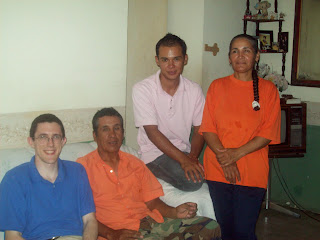
Monday, at Hermano Moreno's suggestion, Susana (his 20-year-old daughter) took me to do some touristy things in the morning. We saw the lagoon...or what was left of it. Someone's child had gotten infected by bacteria in the water and died, so it had been temporarily drained.
Another big piece of recent news was the fire that had ravaged a day-care, claiming the lives of 49 children. A simple monument with names of the victims had been tucked into the plaza:

We found Susi's cousin and enjoyed/endured a lengthy visit, before taking the bus to the centro to buy a few souvenirs. As usual, I did more looking than buying, but I hadn't ever gotten the mandatory tourist item of palo fierro. We found a cute little aguila for around 25 pesos (a little less than $2.50); it's on my dresser now.
Monday afternoon, I said good-bye to everyone (except Hna Moreno, who was working; we had said good-bye after breakfast) and hopped on a Tufesa to Hermosillo. If anyone ever decides to take Tufesa, I recommend taking your own hand sanitizer. I'm very picky about washing my hands after using the bathroom, but Tufesa buses only wait about 3-5 minutes at any given stop on the route. So yes, this is the second time I got left behind by the bus. The Tufesa folks were very professional in handling the situation (does this happen a lot?) - they got me a free seat on the next bus from Empalme and had a girl waiting to help me load my things on at Guaymas.
I was very distressed that I couldn't get anyone on my cell phone either on the trip to Hermosillo or once arrived. It turns out that you will hear a phone ringing even if you have neglected to put in the area code for Mexico (52) in front of the number. Once I figured that out, I got an answer on the first try. In hindsight, I should have just taken a taxi to the Vegas' house and then asked around for an internet cafe. Instead, I trundled out with all my baggage, going two blocks to a nearby internet cafe by the bus station. I was carrying around so much stuff that I left my phone by accident (in the internet cafe, I assume).
A lot of my remaining time with the Vegas was wasted looking for the thing. It was low on batteries and the fellow that got it will have to buy something to recharge it with if he wants to get any use out of it. He actually did call the number under Home, and talked to Mom, but she didn't understand a thing he said, and he didn't answer any of our calls or texts to my phone.
One good thing that did happen that day was getting to eat tacos al pastor for dinner. The prices (10 pesos for one small taco) would have been prohibitively high for a poor missionary (think, 1000 pesos a month), but as a rich tourist, it felt like money well spent. It was my treat; and we bought 17. The water was free at least, unlike the airport (18 pesos for a small bottle!). Our vendor followed the prescription on wikipedia, with the pineapple above and the onion below the "top" of meat. He actually fried the meat on a large griddle before serving it on the freshly warmed tortillas. There was the usual shredded cilantro with raw onion, guacamole (just avocado I think), salsa, and limones. I thought the pineapple gave the pork a nice flavor.

Tuesday morning, Hna. Chavez (another great sister from the Hermosillo ward) took me to the airport in plenty of time for my 11:50 flight. However, the plane door refused to shut, and after about an hour of trying to repair the thing, the flight was cancelled. I declined the free hotel accomadations and the 7 hour bus trip in (you guessed it) Tufesa, opting to stay another day with the Vegas and take the same flight for free. When we weren't looking for my phone, I found time to wash some dishes and some clothes, and get clobbered on PlayStation by Benjamin, the Vegas' twelve-year-old son.
The next morning, the plane took off just fine, on schedule. Unfortunately, AeroMexico had mismarked my bags, so I had to check in again at the Phoenix airport, setting my flight time back by a few hours. I got the last seat available on that flight. Perhaps I should call it the vacation that didn't want to end...
I bought a Quiznos sub for lunch and got change for a dollar (the cashier remembered me from when I bought lunch at Quiznos on Friday!). I called Mom as she was on her way out the door to give her the revised schedule. After lunch I managed to hang out without losing any more items until the flight was taking off. I sat next to Chris, an Air Force pilot from Maryland on the way home (Hill Air Force Base). He had been to some kind of boating conference in Los Cabos, San Lucas for people who live in their sailboats. To kill time, he told me lots of interesting things during the trip, including the different causes of turbulence, the doomster's view of the oil crisis (what happens when we run out of fossil fuel: I found an interesting documentary the next day on youtube), farming in Brazil, and programming planes in 1's and 0's (he also had an electrical engineering degree and had served as adjunct faculty at Weber State). It was a lot to absorb, but I love it so much when people listen to me, and the guy really knew a lot of interesting stuff. Mom was waiting at the airport to greet me, and in a short time, we were on our way home.
What did I learn? In general, I'd say Obregon and Sonora have modernized more since I was there: more computers, more paved roads, even a microwave (!) in the Herrera's house. The gospel gives us great strength by justifying an eternal perspective of life and our relationships with people. I truly am convinced that we can be with our families and our friends for all eternity through the power of God, given to prophets in our day. That is motivation to cultivate those relationships now and view death not as a final separation but a temporary separation of body and spirit, until we are reunited body and spirit and reunited with all our family members who choose to accept the blessings of the gospel of Jesus Christ. I hope I will see many if not all of my family and friends at that day, including the special folks I was with on this trip to Mexico.
 The Year of Living Biblically: One Man's Humble Quest to Follow the Bible As Literally As Possible by A.J. Jacobs